Tuesday, October 24, 2017

Planning DI for Life in New Spain


Life in New Spain


Related image


Our PowerPoint Presentation

Terms to teach*

five explorers
  • Hernando de Soto
  • Esteban
  • Alvar Nunez Cabeza de Vaca
  • Francisco Vazquez de Coronado
  • Juan Ponce de Leon
Society in New Spain
  • A society is a group of people forming a community
  • Peninsulares, Creoles, Mestizos, Indians/Africans
  • Encomienda (gave a peninsulares control of all the native peoples who lived on an area of land)
  • Plantation (large farms with many workers who lived on the land they worked)
More changes for Native people
  • Missionary (one type of encomienda that was run by Roman Catholic missionaries to teach his or her religion to others who have different beliefs)
  • Mission (a religious settlement where missionaries live and work)
  • Bartolome de Las Casas
  • Slavery in the Americas

We were supposed to use Prezi instead of google slides. However, we had a problem with prezi so we made google slides. Amanda will open the introduction and briefly mentioned about Search for gold then Cierra will talk about five explorers. Then I will talk about the society in New Spain and Olivia will explain more changes for native people (Slavery). Between each content, we will have check for understanding. When we are studying the explorers, we will use pop stickers sticks with explorers images. Web organizers and notepad are provided. I was very nervous when I was teaching however, the students were paying attention to our lesson and they were very engaged to the lesson. Even though we were rushing to finish everything but I thought that we managed time really well. We had to cover many concepts so that's why we didn't have enough time I believe. However! I was so proud of my group!!

Monday, October 23, 2017

The voyage of Christopher Columbus (group 2)


The voyage of Christopher Columbus

Image result for the voyage of christopher columbus

Key terms:
Expedition
Colony
Columbian Exchange
Bahama Islands
West Indies

Christopher Columbus:

  • He was born in 1451 in Genoa, Italy and died in 1504.
  • He was an explorer from Spain.
  • He is known for discovering the Americas
  • He was on a voyage to discover the Indies not the Americas

The Taino:

  • THe land that Columbus discovered was an island called Guanahani
  • The island was inhabited by a group of people known as the Taino

Funding the Expedition:

  • Expedition: a journey made for a special purpose
  • Columbus spoke to King Ferdinand & Queen Isabella about his plan
  • He convinced them that he can find a cheaper and quicker way to the Indies
  • Three ships: the Nina, the Pinta, and the Santa Maria
Columbian Exchange: Columbus broght over settlers, animals, and supplies

teaching methods:
Web organizers (Columbus web)
Columbian Exchange Posterboard (thinking caps)

I really enjoyed watching Group 2's direct instruction. It was structured and organized.I also liked their activities that they did. I really like that you had a slide with key terms so students know what they were supposed to focus on.


Fieldwork Information


Lesson plans

Image result for good classroom

Direct Instruction(Behavioral Model)

  • To develop basic skills and knowledge
  • Modeling shows the process of thinking.
  • Demonstration is just showing information.
Ex)PowerPoint presentation, written information on the whiteboard

Indirect instruction IPM (Information Processing Model): inquiry lesson
  • To develop critical thinking skills
Ex) explorers journal with given clues
Indirect instruction SIM (Social Interactive Model) 
  • Cooperative learning methods focusing on social skills.
Ex)Creating poems, artworks, stories, and songs.


Sunday, October 22, 2017

Reflection: Map skills (group 1)


Teaching Map skills 


Image result for map skills lesson plans

  • Globe: a model of earth that shows the two major lines: the equator and the prime median.
  • Many ancient civilizations believed that the earth was flat. This made sailors and explorers worried they would sail right off the earth.
  • Equator: an imaginary line that circles Earth at its widest point between the North and South poles.
  • Prime meridian: an imaginary line that extends from the North and South poles. It passes through the Greenwich, England .
  • Parallels: lines of Latitude that circle the Earth
  • Meridians: lines of Longitude that circle the Earth
  •  Longitude and Latitude: imaginary lines that help us find locations on earth
  • Latitude lines tell us how many degrees north or south of the equator a location is.
  • Longitude lines tell us how many degrees east or west of the prime meridian a location is.
  • Hemisphere: the earth being divided into half spheres
        Northern, Southern, Eastern, Western

How to teach this lesson effectively?
1st direct instruction: Model and demonstration are very significant. 


Reflection:

I really like that the teachers showed the google map. By asking/showing the location of places where students might know, students seemed very involved in the activity. They also made a good transition from the introduction to the next part. Good explanation on map vocabularies with pictures and definitions. I liked that the teacher asked the students if they had any question on what they were learning. Marie provided gestures and keywords (hand motions on latitude and longitude). It seemed that the students remember the terms better! The teachers played a video clip on the map skills. It was a great resource and appropriate to the age of class. Word wall activity was a good way to develop their knowledge. Students seemed very engaged to the activity. However, I wish all students have a chance to participate in this activity. I liked that the teachers provided the world map so all students can look at. Students who participated seemed very engaged with teachers by asking different questions. I thought that the closure was very smooth and clearly emphasized what the students learned today.


Monday, September 25, 2017

Jigsaw Project on cooperative learning


Cooperative learning

Project Jigsaw

Reflection: I really enjoyed working on the jigsaw project. We all became an expert in a specific area and conduct a lesson for others students. As I gathered information of positive interdependence and share it to my expert group to create a lesson, it helped me to master the content and be prepared for teaching. When I gave a lesson to the base group, I was very prepared and feel confident. Learning from other friends was also very interesting because I was able to ask more questions.

PowerPoint Presentation on Positive Interdependence & Individual Accountability

Consideration:
  • hands on activity
  • more engagement
  • Giving a feedback to each other is very important. 
  • When you design a lesson, make it simple and include effective images.
  • Creativity (video, animation, sounds, and etc)
  • Have a plan B (try to practice before you present)
  • Turn & Talk activity
  • Talk louder
  • Try not to read the texts on PPT.


Thursday, September 21, 2017

A Type of the Cooperative Learning


Image result for padlet

Cooperative learning using Padlet.


Padlet is a free application to create an online bulletin board that you can use to display information for any topic. Easily create an account and build a new board. You can add images, links, videos, and more. You can return to add more later.

Reflection:
I loved using Padlet in the classroom. Even though we are reading same documents, we have different opinions on it and also we will have different information that we need as an important. Therefore, Padlet is the best way to share the information and read other people's information. I love using different methods of learning with technology!!


Tuesday, September 12, 2017

What is Social Studies Method?

Origins of social studies
*Overview
-History has dominated the discipline
-Lectures and discussions are primary teaching devices
  -Occasional audio visual aids and field trips
-Homework assigned from textbooks

-Elementary
  -Small group and independent work
  -Manipulatives, films, TV, computers
  -Integrated approaches
  -Greater instructional variety than other subjects


Social Studies Powerful Elements...
Meaningful - Engaging, connects students with real-world situations
Integrative -  Draws on more than one discipline, subject or skill set
Value-Based - Strengthens students' sense of democratic values and social responsibility
Challenging - Incorporates different perspectives and draws on students' critical-thinking skills
Active- Participatory, makes use of manipulative or physical environment


How people Learn? What is Learning?
Image result for learning pyramid

Structure of Knowledge
Jerome Bruner
What is knowledge?

  • Meta-Cognition (evaluation, creation)
  • Generalizations (analyze)
  • Concepts (comprehension)
  • Facts (understanding)
Educational philosophies
  • Re-constructionalism (Social-cognitive)
  • Existentialism (focusing on your child) (learning styles, MI, brain research)
  • Progressivism (Constructivist, cognitive)
  • Perennialism/Essentialism


Models, Strategies, and Methods
Models (approaches to teaching)
  • Personal (self esteem, individuality)
  • Social-Interactive (students learn each other through group working)
  • Informational-processing (short-term memory, long-term memory..)
  • Behavioral (Stimuli, responses)
Strategies (sets of specific steps)
  • Indirect/Individual
  • Indirect/Interactive 
  • Indirect/Cognitive
  • Direct
Methods (specific of teaching)
Examples
  • Indirect/Individual: projects
  • Indirect/Interactive: jigsaw, role plays, discussion, simulation, 
  • Indirect/Cognitive: no worksheets! graphic organizers, inquiry methods
  • Direct: demonstration, guided practice, lecture, home assignment, read from the texts... 

Learning-Planning-Teaching
  • Creative Thinking Evaluation/Synthesis
  • Analysis
  • Application Comprehension
  • Knowledge

Instruction                                       Assessment
Personal                                      Summative/Authentic/projects, E-folios, Self-evaluation, Journals
Social-Interactive                       Peer review,. group processing
Informational-processing
Behavioral


Goal is a general statement (bigger picture). 

What are Building Blocks/Components of Objectives? (Where? closure on the lesson plan)

                    Condition (Given)

Behavior                                          Criterion


Unit Plan Design
  1. Direct
  2. Indirect/Cognitive (Inquiry)
  3. Indirect/Social (CL)
  4. Indirect?Personal (Project)


Tuesday, September 5, 2017

Climate Change


September 5, 2017


Image result for earth


*We derive our energy from fossil fuels which are not renewable. The earth has a limited amount of natural resources.
*Sun is an open system of energy that we can gain.

Questions:
1. Must we change?
2. Can we change?
3. How we change?


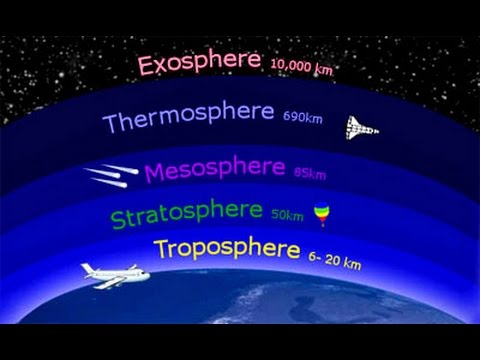
Image result for troposphere


Atmosphere is a sphere of outer space. It is the envelope of gases surrounding the earth or another planet.

Why earth get hot? 
-Sunlight
-As the CO2 concentration increases, more of the outgoing infrared radiation is trapped.

We are Dumping 110 Million Tons of Manmade Global Warming Pollution into the Atmosphere every 24 hours.


Image result for the biggest sources of greenhouse gases


The biggest sources of greenhouse gases
-Coal mining
-Coal plants
-Thawing permafrost
-Oil production
-Air transport
-Fertilization
-Land Transport
-Landfills
-Industrial agriculture

*Cows (fart a lot, air pollution)
*The largest source of global warming pollution is the burning of fossil fuels.

-*Anomaly
-*Exponential curves (growth doubles up)

-Global surface temperature increasingly went up.
-The hottest year ever measured 2016.
-Ocean also got warmer.
(Death ocean; no life in the ocean)
-The Hydro-logical Cycle (evaporation, precipitation, surface on earth(rivers & seas))
-The same extra heat that evaporates more water from the ocean, causing bigger downpours and floods.
-Hotter years typically have more fires (For McMurray, Alberta, Canada)
-Glacier melt (declining ice mass in greenland)
-Sea level rise (miami)
-Climate change will likely lead to food and water shortages, pandemic diseases,disputes over refugees and,, natural disaster region cross the globe.
-Climate change is a medical emergency
-We now risk losing up to 50 % of all land-based species. (lost of habitats)


Thursday, August 31, 2017

First day of Social Studies method class


What I learned from the first class


  • From the first class, I realized that we are going to teach to digital learners. There will be no paper besides name tags. I learned that there are many technology tools that I can use in the classroom like blogger, google doc, Sites, and many others. It seemed very convenience and useful in the classroom. I hope I can use these technology tools for my future classroom. I learned how to insert link to the page and how to insert a video. I look forward to learn more technology that I can use in class.